The garden and food hub has been a vision for decades, now tangible on this community land.
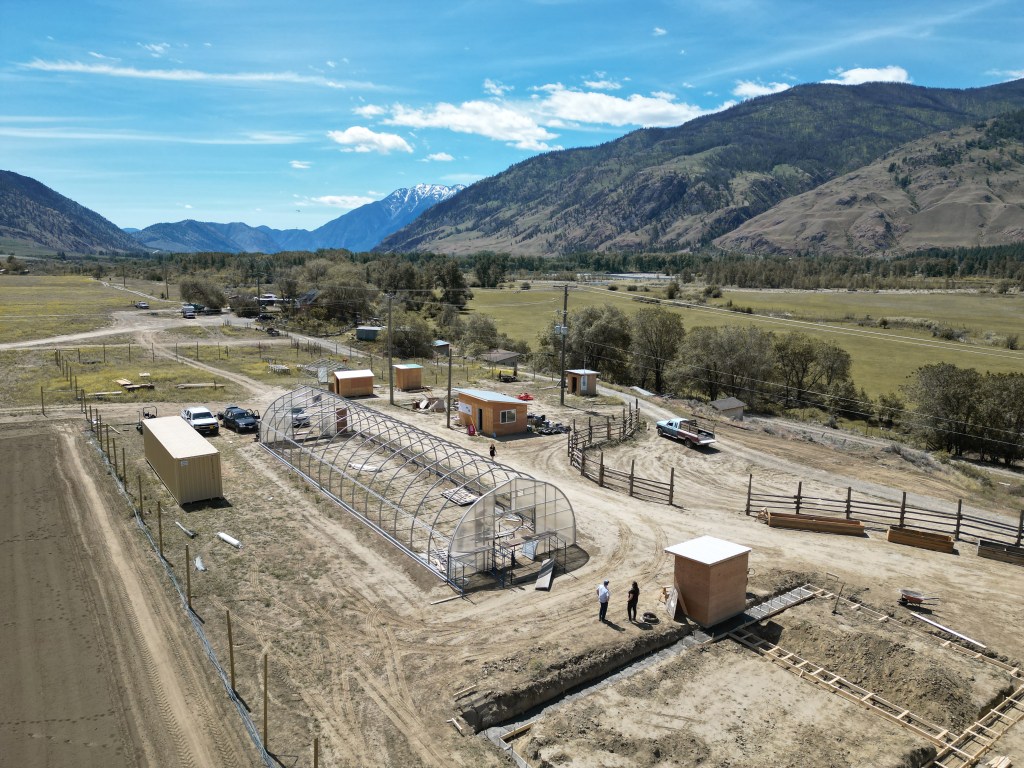
Coming from a culture where land is cherished and respected, ntámłqən aims to hold the values and traditions of the Sməlqmix people close to the heart. The land in which we are building this vision is a central part of community land, meaning it belongs to no one specific. This also emphasizes the fact that we are creating this garden for the people and future generations to come in order to thrive as one. Our cultural foundation rests on the story of the Four
Food Chiefs. This story reminds us that every person and each of our members is vital to the community, each with unique contributions to make.
Farming History of the Land
Before this community land was donated for the purpose of the garden, it already had seen agricultural development in its time. In the 1940s and 50s, the presence of mixed vegetables, mainly tomatoes and potatoes, was prevalent. The farm then took a turn with the production of hay. After this era, mixed vegetables were reintroduced with Dixon’s wholesale business, Similkameen Native Organic Produce. Now, the land is known as ntámłqən Community Garden.
Development by the Band & Community
In 2012, the LSIB Organics opportunities business plan came to fruition. This provided the initial development approach for crop and livestock farming including the phases to consider and projected income generation opportunities.
In 2018, the Comprehensive Community Plan (CCP) was created in a collaborative, community-led fashion. This plan which outlined the collective vision for the community acted as the “metaplan” that guided and weaved together all sector plans (e.g. economic development, land use plan, health plan).
In 2019, the Chief and Council Strategic Plan was developed that entailed what would be beneficial to the community by creating business opportunities. The ideas for a sustainable garden came about including organic farming, community gardens, a greenhouse, and food processing. Initial financial information and forecasting took place, securing the vision of the garden even more. This was also the same year that community engagement started.
Then we began to look at how the garden can benefit the community through strategic planning. Providing food security for all and supporting our community, in the sharing and learning of cultural knowledge is essential. Delivering support for our elders, single parent families and low income households and poverty reduction is a priority.
With the support of LSIB and community workshops, Dixon began to turn this vision into a reality by beginning the farming.
It wasn’t until 2021-2022 that funding was received from the Indigenous Agriculture Development program allowing for further exploration into the viability of a certified market garden. Funding from Economic Trust of the Southern Interior BC (2022-23), the Local Food Infrastructure Fund (2022-23, 2023-24), United Way Regional Community Food Hubs program (2022-23, 2023-24, 2024-25, 2025-26), and the Okanagan Training and Development Council (2023) has enabled ongoing planning, greenhouse and equipment purchases, preliminary infrastructure development (irrigation, power supply), tree nursery development and an initial growing season with training and employment of seasonal workers. In addition, New Relationship Trust (2023-24) and Weyerhaeuser (2024-25) have provided funding for the planning and construction of the food processing facility. LSIB has provided core funding support and the lease for the community land in-kind.
limləmt to all of our funders and supporters.
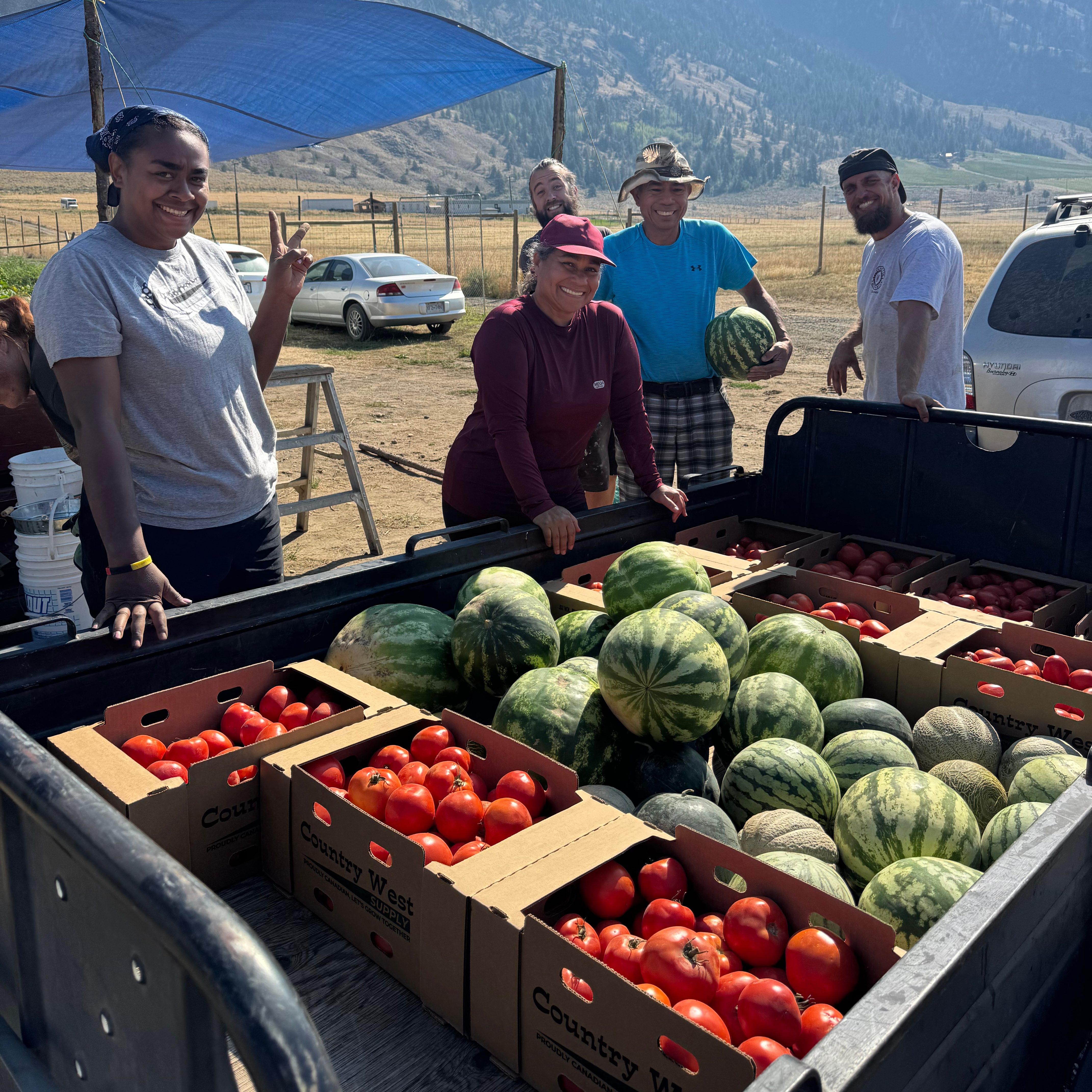
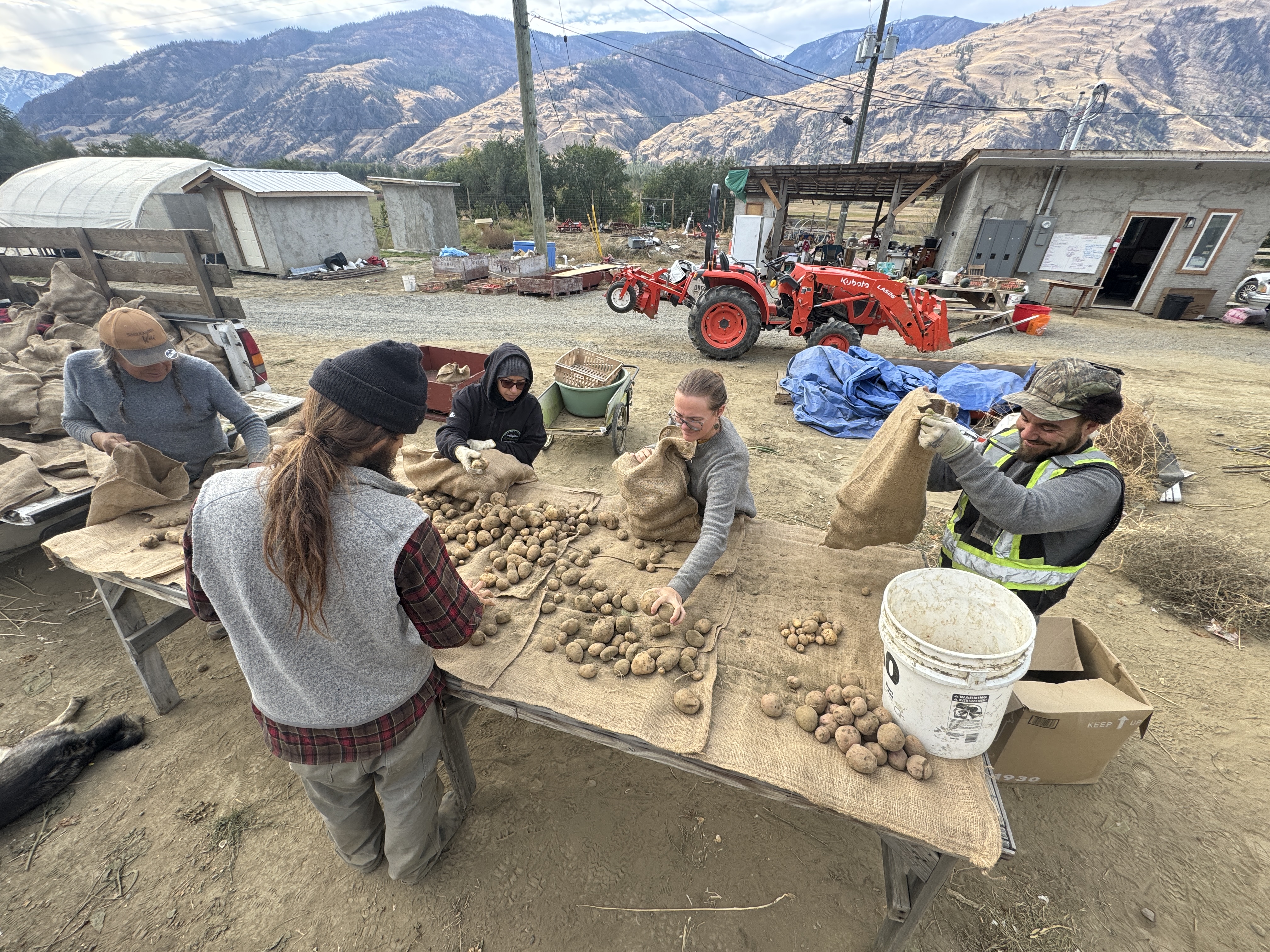
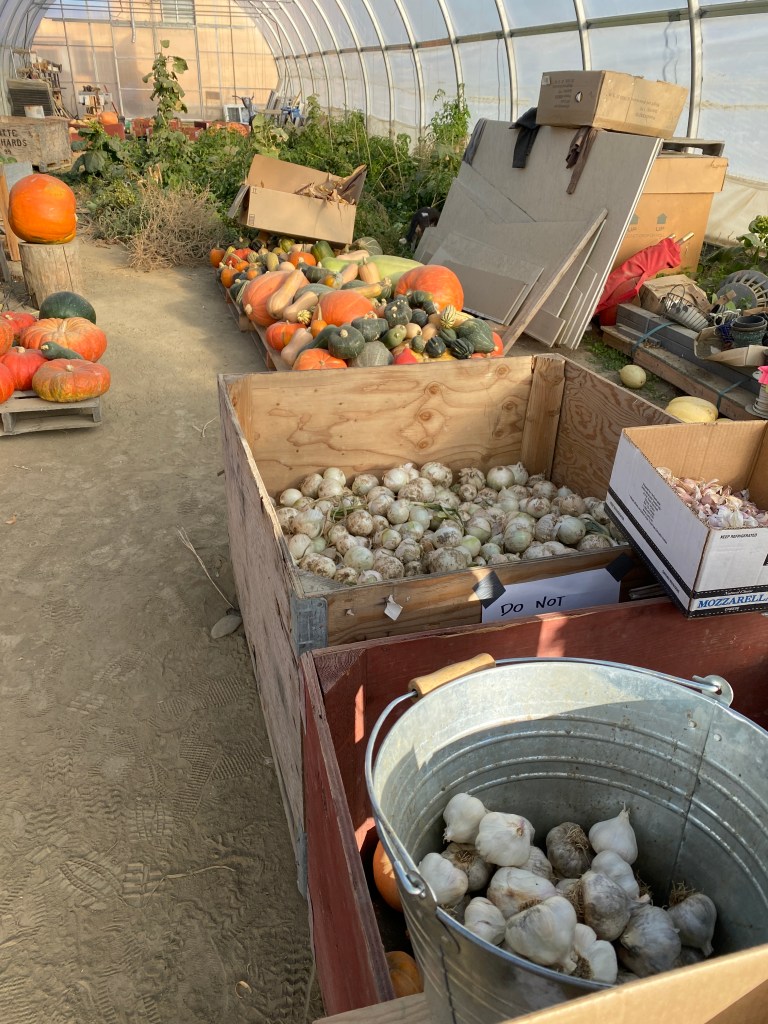
 Ntamtqen Community Garden & Food Hub